|
Research · ASI 2026 Ad Impressions Study
|
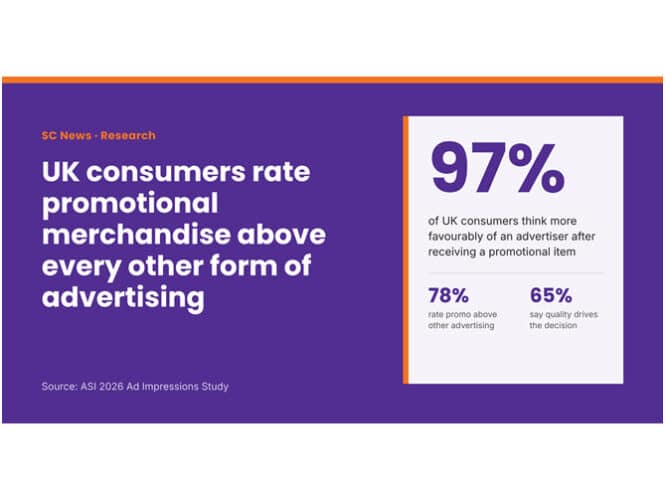
97%
of UK consumers would have a more favourable impression of an advertiser after receiving a promotional item
|
|
78%
of UK consumers view promotional products more positively than other forms of advertising
|
|
65%
of consumers across the study say quality would influence their willingness to buy a promotional item
|
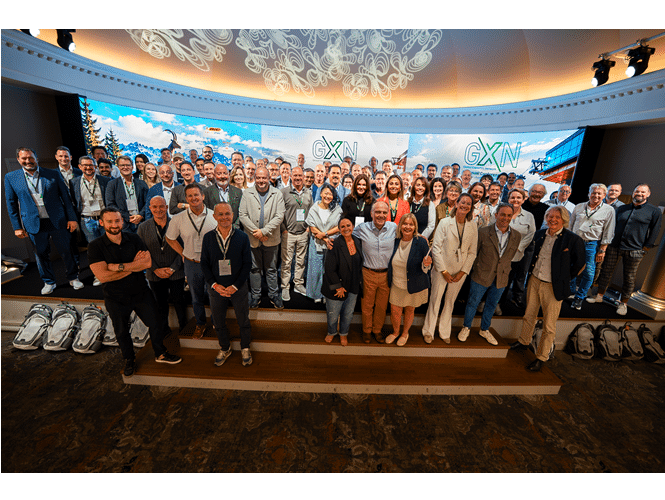
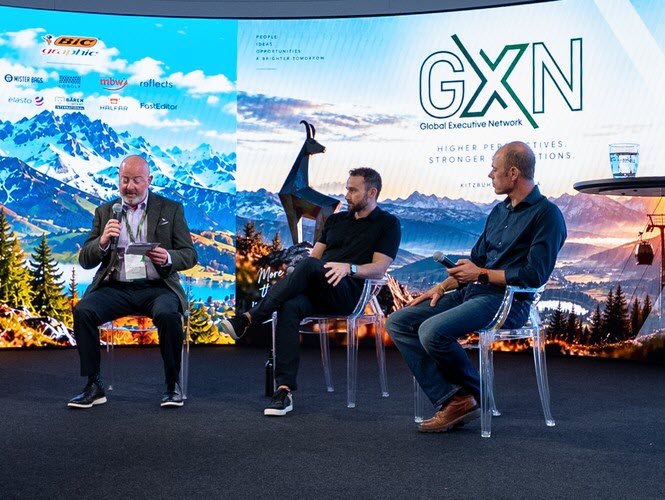
ASI’s 2026 Ad Impressions Study surveyed consumers in 21 European countries about the promotional items they receive, keep and value. Michele Bell, ASI’s Senior Vice President of Editorial, Education and Global Alliances, took delegates through the international results at GXN, on a panel that included Sourcing City Strategy Director Alistair Mylchreest.
The case for the channel
Across the international sample, 95 per cent of consumers said a promotional item would improve their view of the advertiser, and 92 per cent said it would make them more likely to do business with them. Both figures are higher than ASI recorded in the United States, at 78 and 76 per cent.
Promotional products also came out ahead when consumers compared channels. Across the study, 79 per cent held a positive view of promotional products, a higher share than for internet, TV, social media or mobile advertising, and ASI found promotional products ahead of TV, social media, radio and internet advertising in every country surveyed.
The UK sits at the top of that picture. In the UK, 97 per cent of consumers said a promotional item would leave them with a more favourable impression of the advertiser, level with Spain and Portugal at the top of the twelve country breakdowns ASI presented. UK consumers also rated promotional products more positively than other forms of advertising, at 78 per cent.
For a distributor sitting opposite a marketing team weighing up next year’s budget, that is the argument that matters. These figures do not compare one supplier with another. They compare promotional merchandise with the screen, the feed and the banner ad, and promotional merchandise comes out ahead.
How the UK compares
| Country |
More favourable impression after receiving an item |
Rate promo above other advertising |
| Portugal |
97% |
93% |
| Spain |
97% |
84% |
| United Kingdom |
97% |
78% |
| Germany |
96% |
74% |
| Poland |
96% |
86% |
| Sweden |
95% |
84% |
| Austria |
94% |
75% |
| Czech Republic |
93% |
81% |
| France |
93% |
73% |
| Belgium |
92% |
82% |
| Netherlands |
92% |
67% |
| Switzerland |
91% |
72% |
Source: ASI 2026 Ad Impressions Study, country breakdowns presented at the GXN Annual Conference 2026.
What makes a good impression better
ASI also asked whether particular qualities would improve consumers’ view of an advertiser further still. In the UK, more than eight in ten said each of four would.
| Made in the UK |
|
86% |
| Personalised |
|
86% |
| Socially responsible |
|
85% |
| Sustainable |
|
84% |
Share of UK consumers who would view an advertiser more favourably when the promotional item has each quality. Source: ASI 2026 Ad Impressions Study.
Elsewhere in Europe, a locally made item tends to lead the list. Made in Portugal scored 97 per cent with Portuguese consumers, made in Spain 96 per cent and made in Poland 94 per cent. UK consumers rated all four qualities near identically, in ASI’s words, so any of them is a genuine addition to a UK brief.
What decides it: quality and usefulness
Asked what would influence their willingness to buy a promotional item, consumers across the study put quality first by a wide margin.
| Quality |
|
65% |
| Design |
|
38% |
| From a company they love |
|
37% |
| Made in their own country |
|
32% |
| Sustainable |
|
25% |
| A brand name item |
|
24% |
| Socially responsible |
|
17% |
Factors that would influence consumers’ willingness to buy a promotional item, international sample. Source: ASI 2026 Ad Impressions Study.
Usefulness decides what happens next. Asked why they keep a promotional item, consumers put usefulness first in every country surveyed. Across the sample, 74 per cent said they keep items because they are useful to have, against 50 per cent for enjoyable, 40 per cent for attractive and 10 per cent for having the advertiser’s contact details to hand.
What people want to receive
| 1. T-shirts |
48% |
| 2. Mobile power banks |
45% |
| 3. Food gifts |
43% |
| 4. Bags |
41% |
| 5. Notebooks and notepads |
37% |
|
| 6. Fleece and jackets |
36% |
| 7. USB drives |
35% |
| 8. Polo shirts |
34% |
| 9. Drinkware |
31% |
|
Promotional products consumers would be most excited to receive, international sample. Source: ASI 2026 Ad Impressions Study.
The UK breaks the pattern. In the UK results, fleece and outerwear overtook the T-shirt as the item consumers most want to receive. It is a sensible answer from a country that knows its own weather, and a timely one with the winter ordering season under way.
|
“Consumers across Europe told us very clearly that promotional products are the form of advertising they welcome most. What stands out in the UK results is how practical British recipients are. They want quality, they want something they will actually use, and this year fleece and outerwear knocked the T-shirt off the top spot. For any distributor planning a client’s programme, that is exactly where the conversation should start.”
Michele Bell, Senior Vice President of Editorial, Education and Global Alliances, ASI
|
Three takeaways
|
|
Make the case for the channel first. Marketing teams weigh promotional merchandise against other media, not against other suppliers. UK consumers rate it above other forms of advertising, and that belongs in every budget conversation for 2027.
|
|
|
Choose for quality and use. Quality outweighs every other factor when consumers decide, and usefulness decides what they keep. A better item in a smaller quantity can outlast a cheaper one bought in bulk.
|
|
|
Offer the qualities UK clients value, and evidence them. Made in the UK, personalised, socially responsible and sustainable each lift the impression for more than eight in ten UK consumers. Each claim has to be true, and suppliers who can evidence them make that far easier for distributors.
|
|